Those attending IBM Connect may be very familiar with socializing and networking, but your employees might not be adopting this new way of collaborating so easily. In my session 'Become a Social Business: Leverage User Adoption Through Gamification' I explain why and how gamification an be used to make employees understand how Connections can be used to collaborate in a new way.
Here's a little something out of my session 'BP304 Become a Social Business: Leverage User Adoption Through Gamification' for you to get you going.
Gamification helps to spread the 'virus' of user adoption
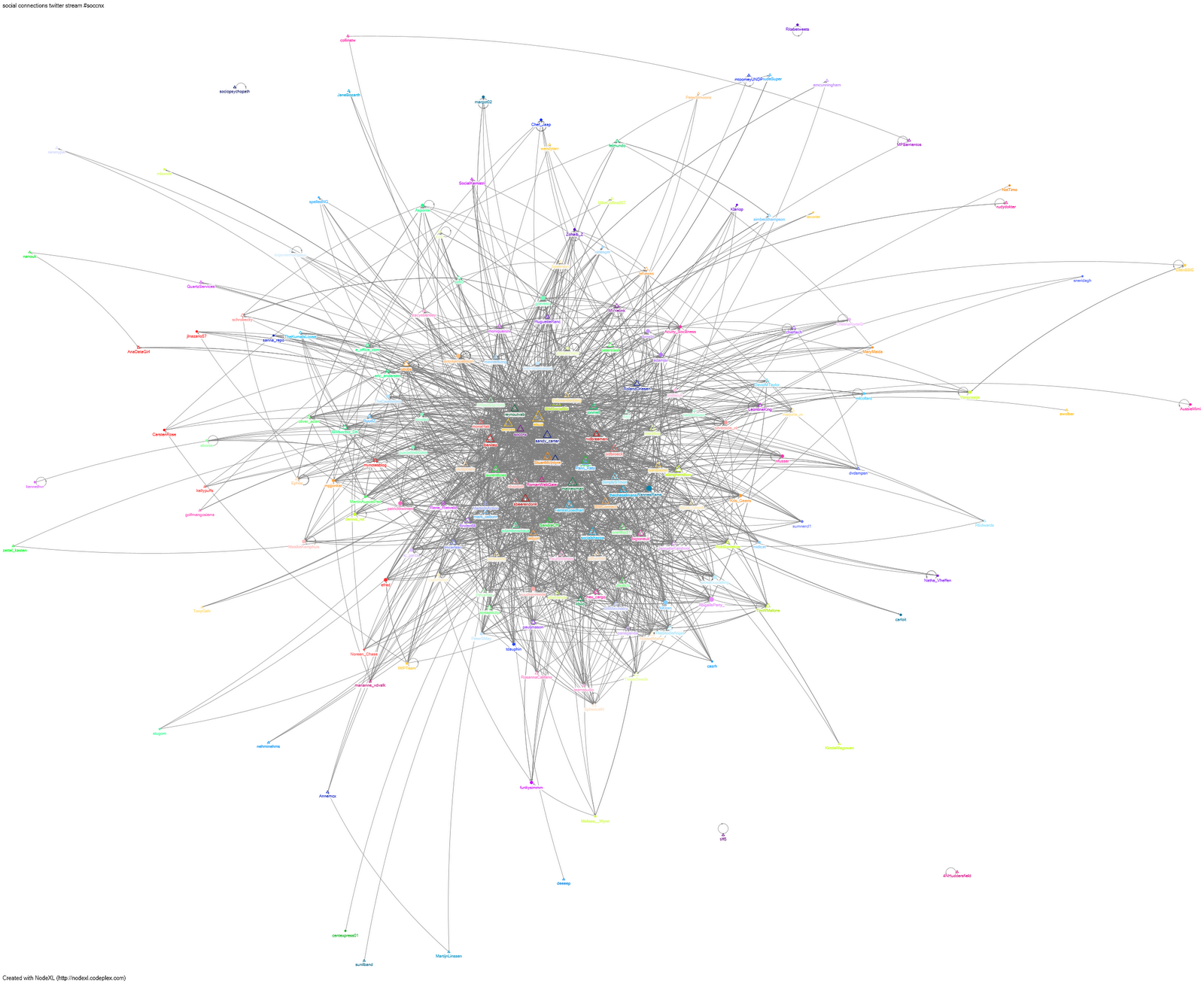
One of the characteristics of social networks is it easily spreads information. Just like a virus the information can easily flow through the networked components. In IBM Connections the employees are the 'nodes' that are connected. Connections should help organisations to have better access to information, find out what's going on in the separate silos made by organizational structures such as departments and enhance collaboration between people. In order to achieve this, employees need to start building social networks.

Gamification uses networks of people to enhance adoption. Through gamification the early adopters and influencers start earning point and badges. The colleagues in their network can see their progress through the Activity Stream.

Building networks in Connections with gamification
The theory explained in The strenghth of weak ties states that networks become more powerful the further they are removed from you. Gamification can be used to start building profiles and networks and the network itself can encourage other users to indulge in gamification and improve their profile and network.
 Source: Granovetter: the strenght of weak ties
Let's see how this works:
First people are encouraged to build their Profile, the pre-requisite to becoming a networked organisation. Secondly employees are encouraged to build networks, starting with the people close to them at first probably, such as their manager and their direct team members. But this network will slowly grow to other circles as they will work with others on projects or get introduced to previously unknown colleagues through their current close circle of colleagues.
When somewhat connected to colleagues they will be influenced by their peers, especially the ones that are well-connected and perform as innovators. Innovators have a tendency to be 'hubs' in the network of the organisation. They are the ones everybody turns to, to ask for advise and they are the ones who acquire the most links. A phenomenon known as 'the rich get richer' in social nework analysis.
Through the network and the Activity Stream in Connections their 'followers' will see them earning points and badges. Seeing them getting badges for this and that can trigger the follower to participate in the same behaviour, trying to accomplish the same thing and as a result seeing the real value of the activity itself. By watching the activities of these innovators in their network, they will soon adopt the same behaviour.
Get more
Come join my session BP304 Become a Social Business: Leverage User Adoption Through Gamification on tuesday 4:15-5:15 in SW Pelican1-2 at IBM Connect to learn more about gamification for IBM Connections.